Graphic Design Inspiration Beyond Pinterest Trends
When starting a new design project, it’s natural to look at what’s already out there. Inspiration is everywhere, but where you choose to look (and how you use it) makes all the difference.
While Pinterest is often a go-to starting point for designers, true creative depth comes from expanding beyond digital boards and algorithms. Here’s a closer look at how we approach inspiration in a way that supports originality, strategy, and thoughtful brand development.
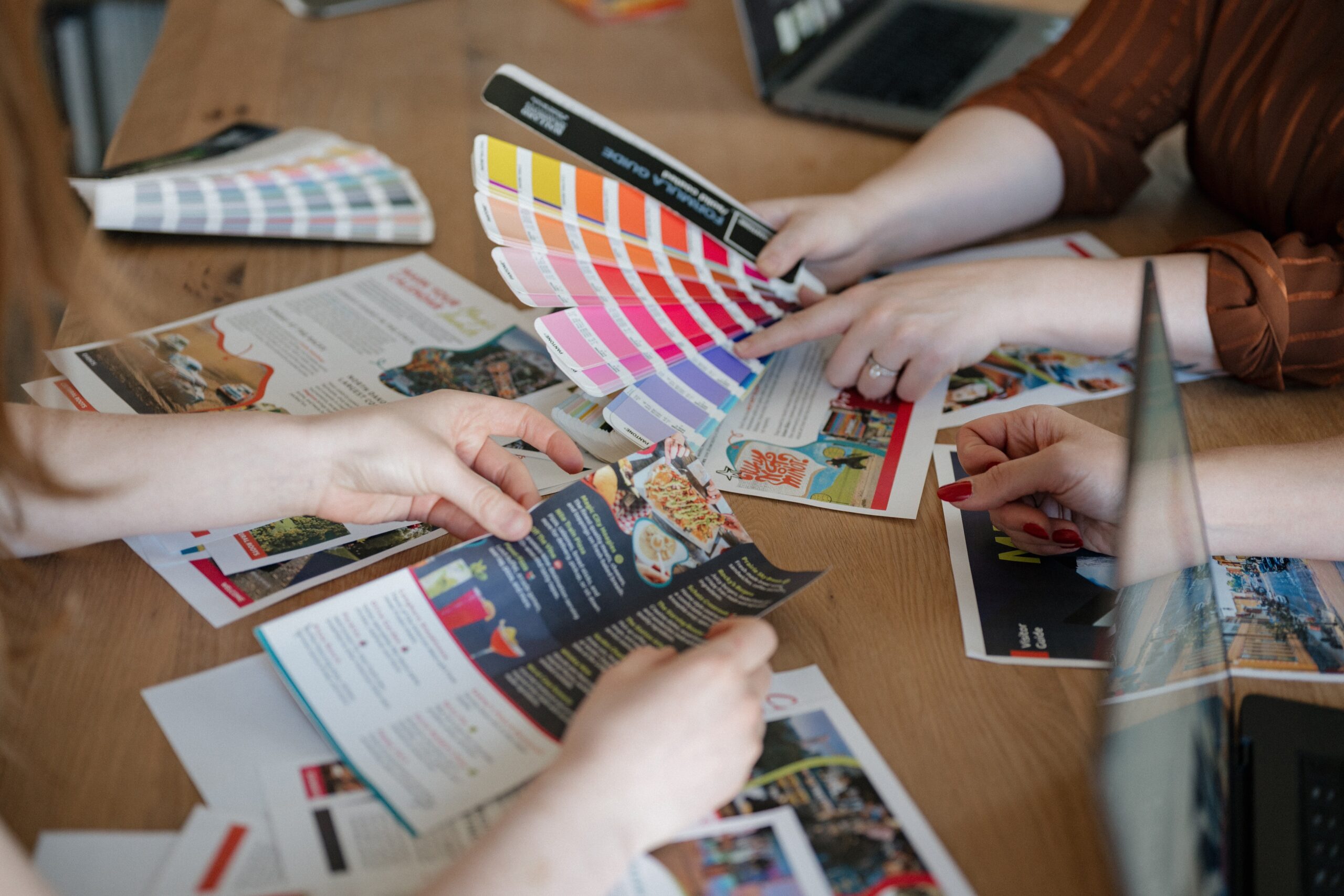
Starting With the Industry, But Not Staying There
At the beginning of a project, it’s important to understand the landscape. Looking at what others in the same industry are doing helps identify trends, visual patterns, and common design approaches.
Platforms like Pinterest can be helpful for this. They quickly reveal what’s popular, what’s been overdone, and what feels repetitive. In many ways, it’s a tool for elimination as much as inspiration. Seeing the same styles surface repeatedly helps clarify what not to do, and opens the door to thinking differently.
But relying solely on algorithm-fed inspiration has its limits. When your feed continuously serves similar visuals, it becomes easy to unintentionally design within a narrow creative loop. Breaking out of that loop requires stepping away from the screen.
Drawing Inspiration From Everyday Life
Some of the strongest creative sparks don’t come from design platforms at all, they come from everyday surroundings.
Environment plays a major role in how we see the world and interpret visuals. Inspiration can come from:
- Book covers and editorial layouts
- Typography on signage
- Shapes in architecture and nature
- Packaging on retail shelves
- Curves and forms in everyday objects
- Even something as simple as driving past an interesting sign
Building a personal design library, both physical and mental, creates space for unexpected ideas. Flipping through books, noticing patterns in public spaces, or studying typography in the wild often leads to more distinctive creative directions than scrolling ever could.
You never quite know what will jump out at you, and that’s the beauty of it.
Capturing Ideas in the Moment
When inspiration doesn’t live on a digital board, it requires a different kind of collection process.
Photos become valuable. If something stands out, a magazine cover, a unique layout, a striking color combination, capturing it ensures it won’t be lost. Physical pieces get saved when possible. Sketchbooks become essential.
Sketching is often the bridge between observation and execution. Ideas don’t need to be perfect or polished, sometimes they’re barely legible scribbles. But getting them onto paper creates a reference point. It allows you to revisit a thought later rather than relying on memory.
This habit builds a layered, evolving source of personal inspiration, not algorithm-generated.
The Fine Line Between Inspiration + Imitation
In design, inspiration and imitation sit very close together.
There are countless talented designers producing exceptional work. With so many projects circulating online, similarities are inevitable. The key difference lies in intention.
Inspiration should act as a starting point, a spark that drives imagination forward. It should never be the final destination.
Originality doesn’t mean an idea appeared from thin air. It often begins with something that already exists, then evolves through exploration, sketching, refinement, and strategic thinking. The goal is to branch off, transform, and build something distinctly aligned with the brand in front of you.
It’s a careful balance, and one that requires awareness and discipline.
Turning Abstract Ideas Into Strategic Design
Inspiration is often abstract. A color palette. A pattern. A texture. A feeling.
Translating that abstraction into strategic brand elements is where design becomes intentional.
Color guidance, pattern direction, and compositional ideas can all be drawn from abstract sources, but they must serve a larger purpose. Because art is subjective, different people see different things in the same piece. Inviting multiple perspectives can help clarify what’s truly usable and relevant.
Ultimately, inspiration must align with brand strategy. It has to support the message, the positioning, and the experience the brand is creating, not just look visually compelling.
How Inspiration Evolves Over Time
As designers grow, so does their relationship with inspiration.
Early in a career, the sheer volume of talent in the industry can feel intimidating. With so much incredible work available online, it’s easy to feel pressure to measure up, or to lean too heavily on what’s already been done.
Over time, that shifts.
There’s a return to organic thinking. Pen and paper. Sketchbooks filled with rough ideas. Flipping through magazines. Letting imagination lead before searching for references.
Digital platforms like Pinterest, Behance, Dribbble and social media remain valuable tools. But they can also be overwhelming. When overused, they risk muting the natural creative instinct that comes from thinking freely and imaginatively from the start.
True inspiration often begins offline.
Looking Beyond the Board
Pinterest isn’t the problem, it’s a tool. The difference lies in how it’s used.
By looking beyond digital feeds and drawing from lived experience, physical environments, and organic creativity, design becomes more layered, more intentional, and more original.
And ultimately, that’s what creates brands that don’t just follow trends, they stand apart from them.
